Eat and cook
Korean BBQ: Restaurant to Home
Korean barbecue works because the table controls heat, timing, seasoning, and contrast. Choose one main cut, cook in small rounds, and treat lettuce, sauces, kimchi, and the final starch as parts of the meal rather than decoration.
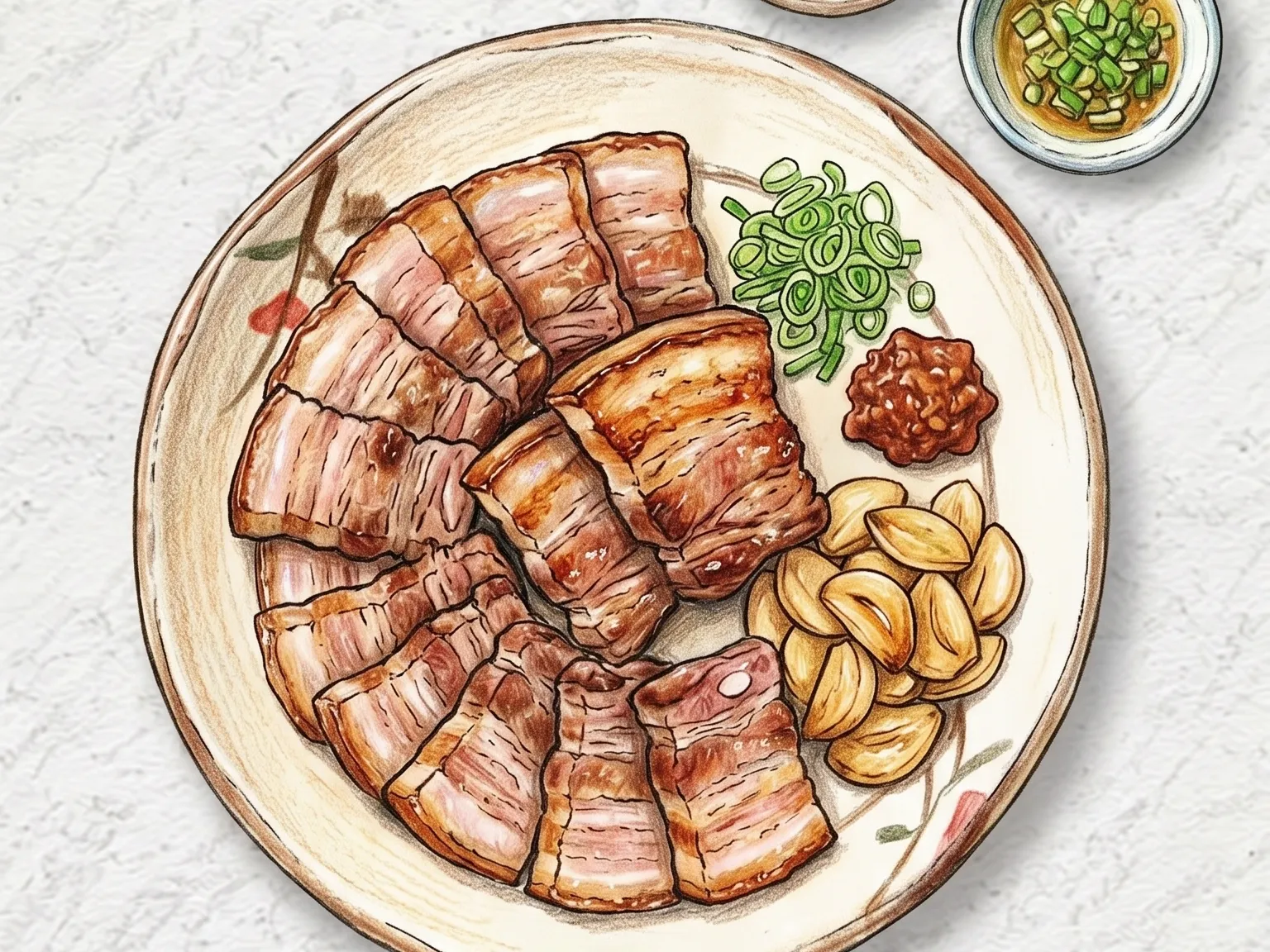
Choose the cut by the experience
- Samgyeopsal: unseasoned pork belly with a high fat ratio. It rewards crisp edges and sharp accompaniments such as scallion salad and pickles.
- Moksal: pork collar or shoulder with more lean meat and a springier bite. It is easier to overcook, so remove it before it turns firm.
- Galbi: ribs, often marinated with soy, sweetness, garlic, and fruit. The sugar browns quickly and requires a cleaner grill surface.
- Hanwoo and beef cuts: best when beef flavor is the point. Start with salt before adding ssamjang or strong pickles.
For a first meal, choose one unseasoned cut and add a marinated cut only if the group is still hungry. Ordering many cuts at once crowds the grill and makes doneness harder to control.
Read the price and minimum
A menu may list grams per portion, and many restaurants require two initial portions. Two portions do not always mean food for two people because the weight varies. Check the gram line and plan rice, stew, or noodles as part of the total meal.
Staff may grill the meat, especially at premium restaurants. If staff take over the tongs, let them control the sequence. At self-grill restaurants, keep raw-meat tongs separate from chopsticks used to eat.
Build the table in rounds
- Heat the grill fully before loading it.
- Cook a manageable batch with space between pieces.
- Move cooked meat to a cooler edge or shared plate.
- Eat some bites plain before adding sauce.
- Alternate rich meat with kimchi, pickles, scallion salad, and leaves.
A balanced wrap: one leaf, one piece of meat, a small dab of ssamjang, and one crisp or acidic addition. A wrap should fit in one bite.
Choose the finish deliberately
Naengmyeon cools and sharpens the end of a fatty meal. Doenjang jjigae with rice makes the finish warm and savory. Fried rice works when the grill or pan holds seasoned juices, as with dakgalbi. Choose one finish unless the group is large.
Recreate the useful parts at home
A tabletop grill is optional. A heavy skillet, good ventilation, and small batches produce a better result than crowding a portable grill. Prepare all side components before heating the pan because the meat phase moves quickly.
- Dry unseasoned meat before it enters the pan.
- Use medium-high heat and render pork belly gradually.
- Cook sugary marinades at slightly lower heat.
- Keep raw and cooked utensils separate.
- Serve lettuce, sliced garlic, kimchi, scallion salad, salt, and ssamjang in small dishes.
Control smoke before cooking
Open the kitchen ventilation before the pan heats, not after smoke builds. Trim only excessive loose fat because some rendered fat is part of the cooking medium. Pour off surplus between batches if it begins to burn, and wipe sugary marinade residue before loading fresh meat. This keeps the later batches from tasting scorched.
Choose the next direction
Use Korea Eats for Seoul restaurant candidates. Use Charim when ingredient amounts and cooking steps matter.