Food decisions
Choose Korean Regional Food by Route
Korean regional food makes more sense as part of a journey than as a master checklist. Use climate, local ingredients, and city history to choose one dish that belongs where you are already going.
Use the region before the restaurant name
A famous dish may be available in Seoul, but eating it near its source adds market context, local side dishes, and neighboring specialties. The practical order is simple: choose the region, choose the meal format, then compare restaurants. Do not build a route around six foods that happen to appear on a national list.
Capital area and Gangwon
Gyeonggi and Incheon suit short additions to a Seoul trip. Suwon is associated with large-cut galbi, Uijeongbu with budae jjigae, and Incheon with dishes shaped by its port history, including jjajangmyeon and soy-marinated crab. These are full meals, so choose one rather than treating them as snacks between sights.
Gangwon connects mountains, buckwheat, potatoes, tofu, and the East Sea. Chuncheon dakgalbi is a griddle meal for sharing. Gangneung's Chodang sundubu offers a gentler tofu-centered meal, while Sokcho adds seafood, squid, cold noodles, and market food. Pick Gangwon when the route already includes the coast or mountains, not as a same-day detour from southern Seoul.
Chungcheong and Jeolla
Chungcheong often rewards travelers who prefer quieter food stops. Daejeon is linked with kalguksu, while Geumsan is associated with ginseng. Inland produce, noodles, freshwater ingredients, and market bakeries can matter as much as a single signature plate.
Jeolla is the strongest route for a table built from many components. Jeonju bibimbap organizes rice, namul, sauce, and garnish in one bowl. Damyang tteokgalbi is grilled minced meat shaped into patties. Gwangju and South Jeolla add generous set meals, yukjeon, marinated crab, octopus, cockles, and coastal seafood. If side dishes and ingredient contrast matter more than speed, reserve time for a complete meal.
Gyeongsang, Busan, and Jeju
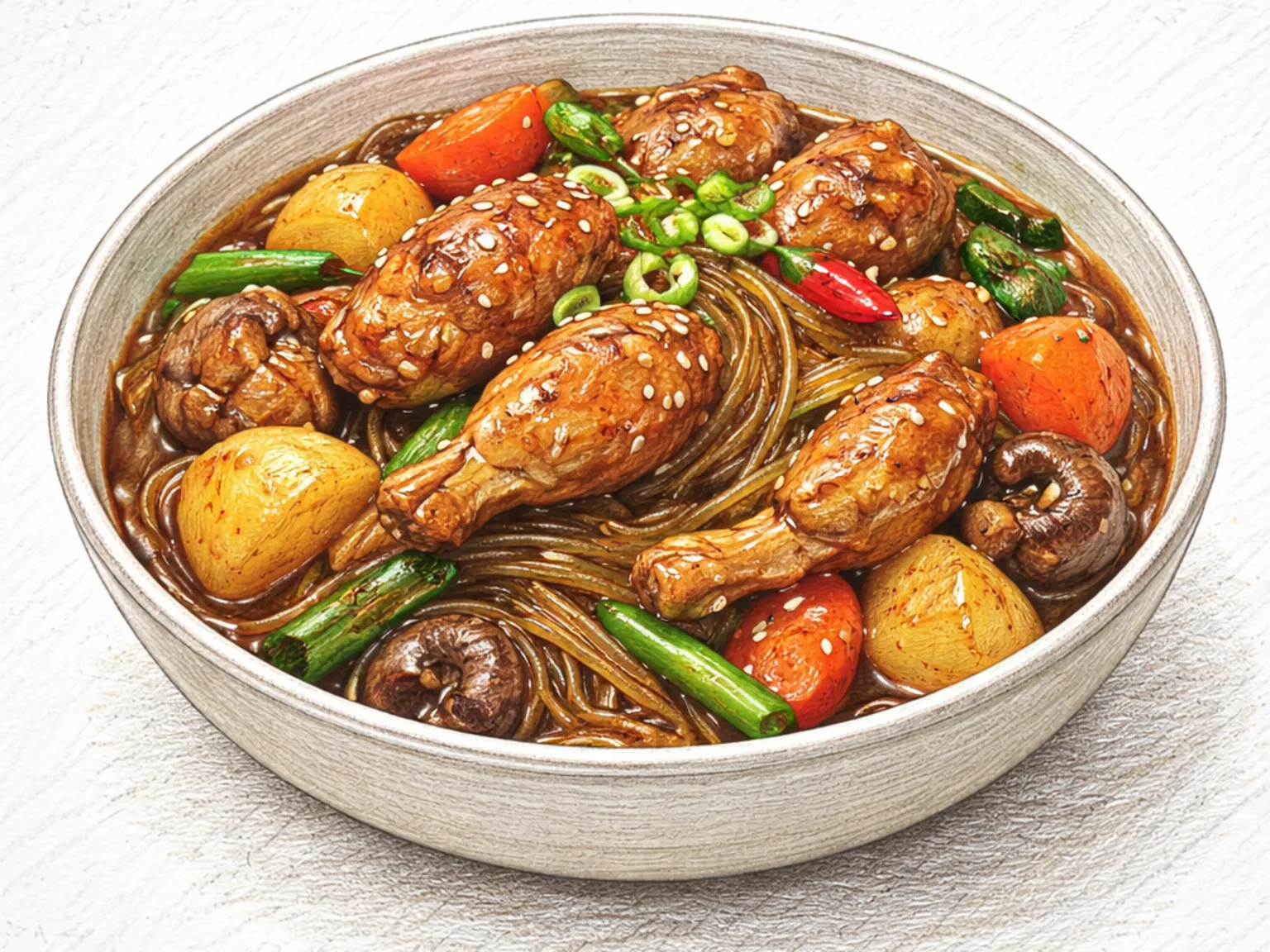
Gyeongsang includes several direct, strongly seasoned city dishes. Andong jjimdak braises chicken, vegetables, and glass noodles in a soy-based sauce. Daegu has its own chicken and offal traditions. Busan's dwaeji gukbap places pork and broth with rice, while milmyeon provides a cold noodle counterpoint.
Jeju is better approached through the island's actual ingredients than through a generic Korean menu. Black pork is the obvious shared grill meal, but grilled fish, abalone, seaweed, and local noodle or soup dishes can fit coastal days better. Confirm catch, portion size, and market pricing before ordering seafood.
Route rule: choose one regional anchor meal per destination. Add a market or bakery only when it fits the same walking route. The goal is to understand a place, not complete a national food inventory.
A four-question filter
- Is the dish tied to the place? Prefer a local ingredient, production method, or city history over a label alone.
- Does the format fit the group? Grills and large braises suit groups. Soup, noodles, and bibimbap work more easily for one person.
- Does it fit the day's geography? A good regional meal near the route beats a famous meal that consumes half a day in transit.
- Is current information verified? Check the restaurant's own channel or a current map listing for hours, queue systems, and sold-out items.
Continue from region to candidates
Use Korea Eats to browse restaurants by region and category. If the trip stays in Seoul, return to the neighborhood planner.