Korean cooking
Choose the Right Korean Rice Bowl
Bibimbap, dolsot bibimbap, deopbap, fried rice, and soup with rice are not interchangeable. The difference is how sauce, heat, and toppings meet the rice.
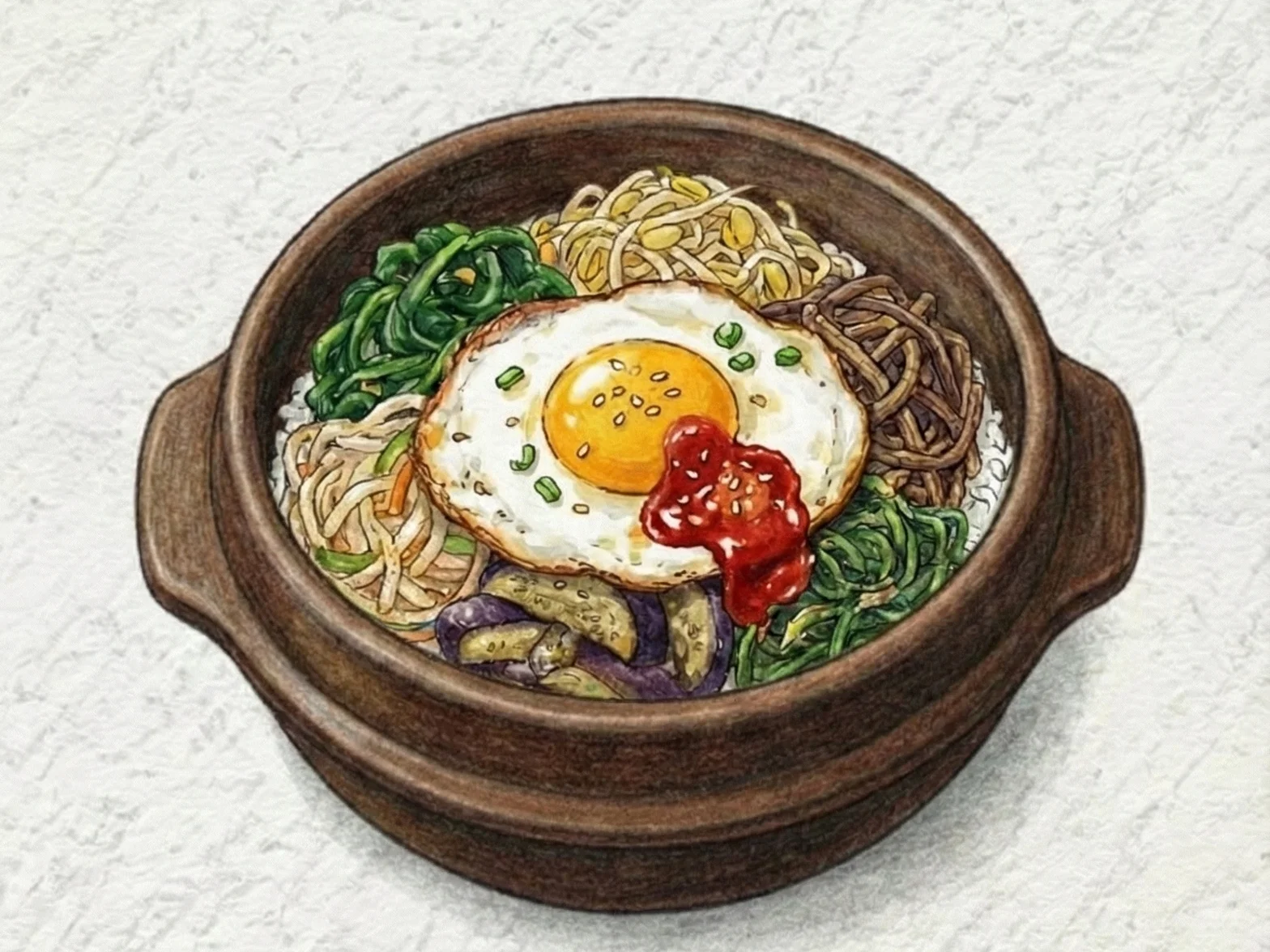
Five bowl families
Bibimbap starts with rice and separately seasoned toppings, then asks the diner to mix them with gochujang or another sauce. It is the best format for contrasting vegetables and controlled use of leftovers.
Dolsot bibimbap uses a heated stone bowl. The bottom layer of rice becomes crisp while the toppings stay hot. Mix once the bowl reaches the table, but leave some rice against the stone long enough to form a crust.
Deopbap places one cooked main over rice. Bulgogi, spicy pork, chicken, tofu, curry, or egg carries its own sauce, so the bowl is more unified and usually faster to assemble than bibimbap.
Bokkeumbap, fried rice, cooks rice with the other ingredients. Kimchi fried rice is the familiar example. It works when the rice should absorb seasoning and take on toasted edges rather than remain a neutral base.
Gukbap joins soup and rice. The rice may arrive inside the broth or beside it. This is a complete soup meal, not simply a dry bowl with extra liquid.
Quick rule: choose bibimbap for contrast, dolsot for crisp rice, deopbap for one saucy main, fried rice for integrated seasoning, and gukbap for broth.
Build a bowl that stays balanced
A useful home bowl has five jobs. Rice provides the base. One protein or substantial vegetable provides weight. Two or three vegetables add contrast. Sauce connects the parts. A final crisp, fresh, or nutty element keeps the last bite from becoming flat.
- Base: warm short-grain rice is standard, but mixed grains or leftover rice can work when the format suits them.
- Main: beef, chicken, tofu, egg, mushrooms, or seasoned legumes should carry enough flavor to season some of the rice.
- Vegetables: combine one tender cooked vegetable with one crisp or fresh element. Five separate namul are optional, not a requirement.
- Sauce: gochujang sauce suits bibimbap, soy-based sauce suits many deopbap, and kimchi can season fried rice. Add gradually.
- Finish: sesame seeds, toasted seaweed, scallions, cucumber, or a crisp rice crust can supply the missing texture.
Use leftovers without making a random bowl
Start by sorting leftovers into roles. A spoonful of namul and roasted vegetables can become bibimbap. A saucy braise can become deopbap. Mature kimchi and cold rice point toward fried rice. Soup with enough solids may work with rice, but adding rice to every leftover broth does not automatically make gukbap.
Reheat each component according to texture. Warm rice with a little moisture. Heat meat, tofu, or mushrooms fully. Keep cucumber, kimchi garnish, herbs, and seaweed out of the microwave. Assemble only after the hot elements are ready.
A 15-minute bowl sequence
- Start the rice or reheat a cooked portion.
- Choose one pan-cooked main and one no-cook topping.
- Mix a small amount of sauce separately so the bowl is not flooded.
- Place ingredients in distinct sections if making bibimbap, or spoon the cooked main over rice for deopbap.
- Add the crisp or fresh finish at the table.
Continue to an exact recipe
Use Charim when the bowl family is clear and ingredient amounts matter. Compare the pantry first if the sauces are unfamiliar.