Korean cooking
Korean Soups and Stews Explained
The English word "soup" hides several Korean meal formats. Guk is everyday broth, tang often builds depth through longer cooking, jjigae concentrates seasoning, and jeongol cooks as a shared centerpiece.
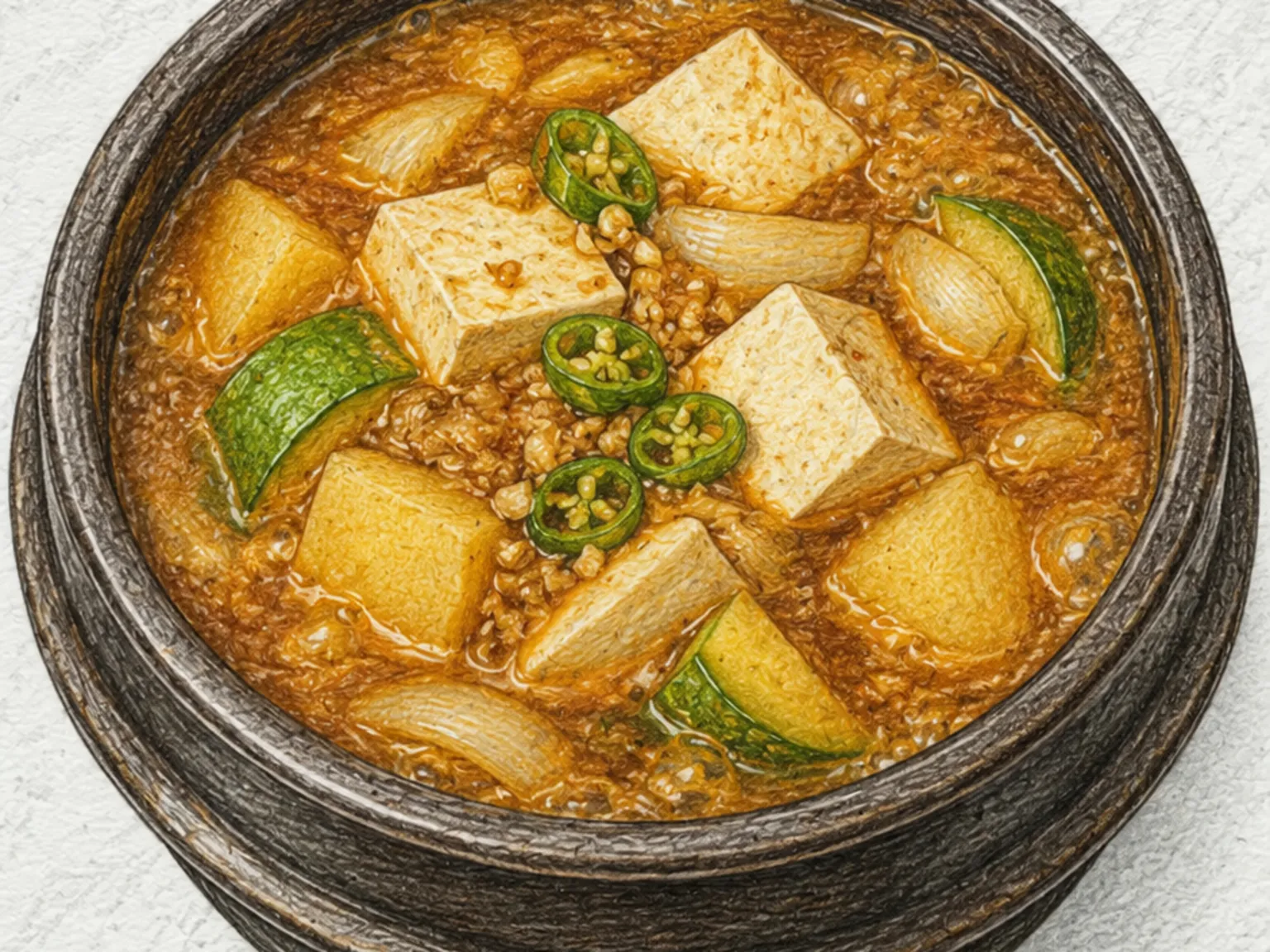
Four formats, not four rigid laws
Guk usually accompanies rice as part of an everyday meal. Miyeok-guk, kongnamul-guk, and muguk tend to have more broth and restrained seasoning.
Tang often refers to a substantial broth made with bones, meat, seafood, or long simmering. Galbitang, seolleongtang, samgyetang, and gamjatang differ greatly, so the suffix is a clue rather than a complete definition.
Jjigae has less liquid and stronger seasoning. Doenjang jjigae, kimchi jjigae, and sundubu jjigae usually arrive bubbling and work closely with rice.
Jeongol is assembled for sharing and often continues cooking at the table. Ingredients are arranged in a wide pot, then noodles or rice may follow.
Choose by broth family
- Clear and light: radish soup, seaweed soup, pollock soup, and bean-sprout soup.
- Milky and meat-based: seolleongtang, gomtang, and some bone soups. Salt and scallions may be adjusted at the table.
- Fermented and savory: doenjang jjigae and cheonggukjang use soybean fermentation for depth.
- Spicy and acidic: kimchi jjigae and yukgaejang gain structure from red pepper, aromatics, and mature kimchi or shredded beef.
- Seafood-forward: haemultang, maeuntang, and clam soups depend on ingredient freshness and controlled cooking time.
Restaurant shortcut: choose guk or a single-serving tang for a quick solo meal. Choose jjigae with rice for concentrated comfort. Choose jeongol when the table wants to share and continue eating in stages.
Build a soup at home
Begin with the base rather than the garnish. Anchovy and kelp broth supports many vegetable, tofu, and doenjang soups. Beef or bone broth carries radish, brisket, and richer bowls. Kimchi stew can begin with pork fat or canned tuna before liquid is added.
Add ingredients by cooking time. Roots and tough meat enter early. Tofu, zucchini, mushrooms, and leafy vegetables enter later. Scallions and fresh chile should retain some aroma at the end.
Season at the correct layer
Soup soy sauce adds salt and savory depth without darkening the broth as much as regular soy sauce. Doenjang supplies salt as well as fermentation, so taste after it dissolves. Fish sauce can strengthen kimchi and clear soups in small amounts. Salt remains useful when the broth already has enough aroma and only needs precision.
A bubbling earthenware bowl stays hot for several minutes. Let the first boil settle before judging salt or taking a large spoonful.
Order by how you want to eat
Choose guk or a clear tang when soup should support rice and several side dishes. Choose jjigae when the pot itself should season each spoonful of rice. Choose jeongol for a group that wants one shared centerpiece and time at the table. Before ordering, check whether rice is included and whether the listed pot size is individual or shared. The same dish name can be served differently by restaurant.
Choose a bowl and cook it
Continue to Charim for recipes grouped by soup and stew family.