Food decisions
Doenjang Jjigae or Cheonggukjang?
Both are Korean stews built around fermented soybeans, but they differ in fermentation time, aroma, visible bean texture, and when the paste enters the pot.
The short answer
Choose doenjang jjigae for a moderate fermented flavor, a broth that accepts many vegetables, and an easier first Korean stew. Choose cheonggukjang for a stronger aroma, thicker texture, visible soybean character, and a bowl meant to stand up to plain rice.
What changes between the two
- Fermentation: doenjang is a longer-fermented soybean paste. Cheonggukjang is fermented for a much shorter period, commonly measured in days rather than months.
- Aroma: doenjang smells fermented but usually remains moderate in a mixed stew. Cheonggukjang has a more forceful aroma before and during cooking.
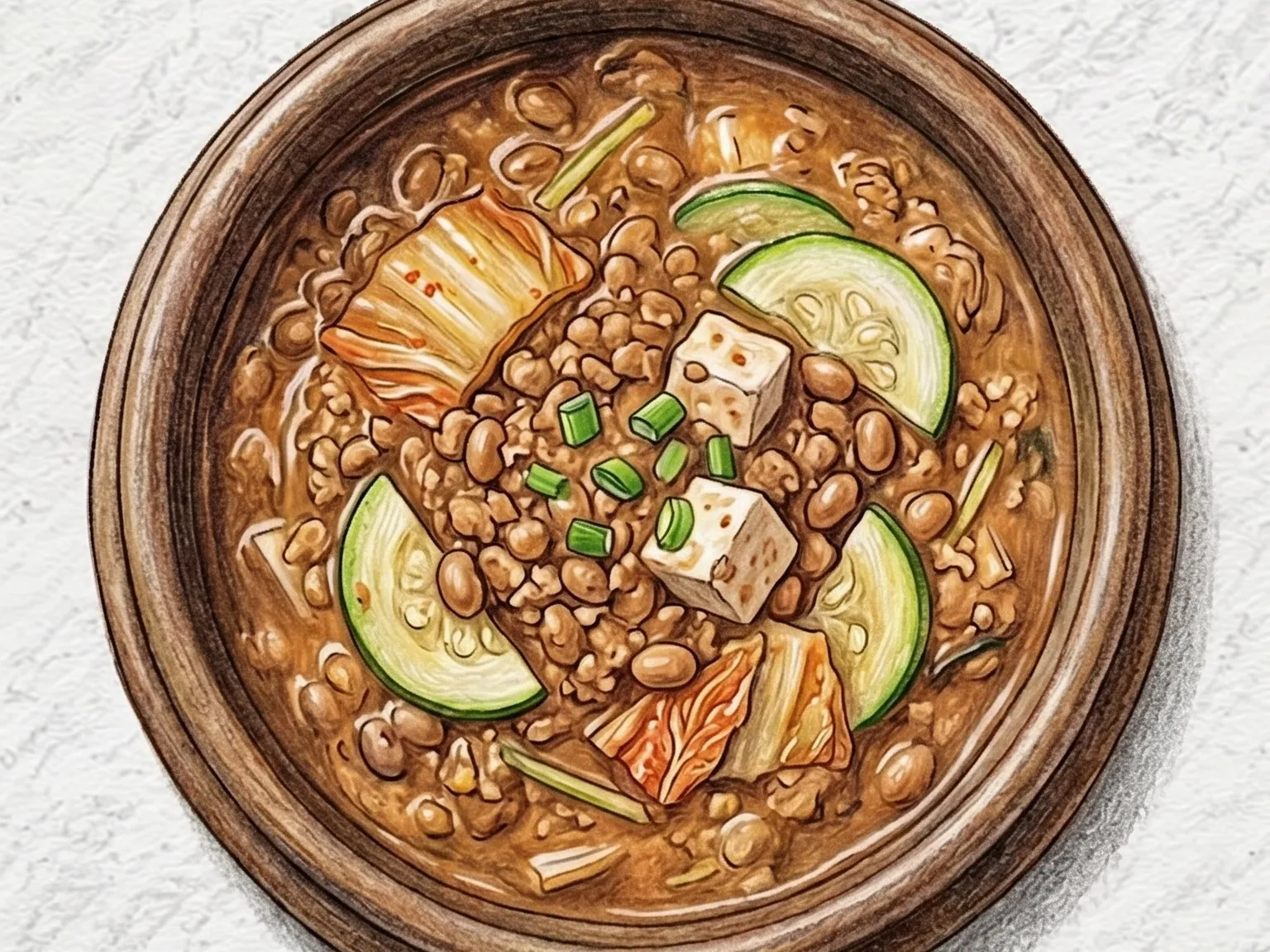
- Texture: doenjang dissolves through the broth. Cheonggukjang can retain crushed or whole soybean pieces and produce a thicker bowl.
- Common partners: both work with tofu, onion, zucchini, mushrooms, and chili. Potato is common in doenjang jjigae. Kimchi is more likely to appear in cheonggukjang.
- Timing: doenjang can simmer with the stock and firm vegetables. Cheonggukjang is better added after the main ingredients have cooked so its aroma is not flattened by a long boil.
First pot: begin with doenjang jjigae if fermented soybean stew is new to you. Move to cheonggukjang when you want more bean texture and a stronger aroma rather than simply making the first stew saltier.
Build doenjang jjigae
Start with water, rice-rinsing water, vegetable stock, or anchovy stock according to the diet and recipe. Dissolve the paste, then cook firm vegetables such as potato and onion before adding zucchini, mushrooms, and tofu. Taste after the vegetables have released water. Different pastes have different salt levels, so measuring the paste is more reliable than seasoning by color.
A small amount of chili can sharpen the broth, while seafood or beef can make it rounder. Neither is required. The goal is a savory broth that still lets the vegetables taste distinct.
Build cheonggukjang
Cook the stock and main vegetables first. Add tofu and kimchi if the recipe uses them, then stir in cheonggukjang toward the later part of cooking. A short final simmer keeps more of its characteristic aroma. The stew should be substantial enough to spoon over rice, but it does not need to become a paste.
If the aroma feels too strong, use less cheonggukjang and blend in a small amount of doenjang. This creates a gentler transition without hiding the ingredient under extra chili or salt.
Choose by the rest of the table
- Use doenjang jjigae beside grilled meat, fish, or several banchan because it can support the table without dominating it.
- Use cheonggukjang with plain rice and simpler sides because the stew already carries strong aroma and texture.
- For a vegetarian version, verify the stock and kimchi as well as the visible ingredients.
- For either stew, add salt only after tasting the paste in the finished volume of broth.
Continue to an exact recipe
Use Charim for measured ingredients and steps. Compare the broader soup family when neither stew is the right bowl.