At the table
Korean Dining Etiquette That Matters
Korean dining is less about memorizing ceremonial rules than noticing the group. Share cleanly, let the table move together, avoid waste, and follow the host when the setting is formal.
The table is shared
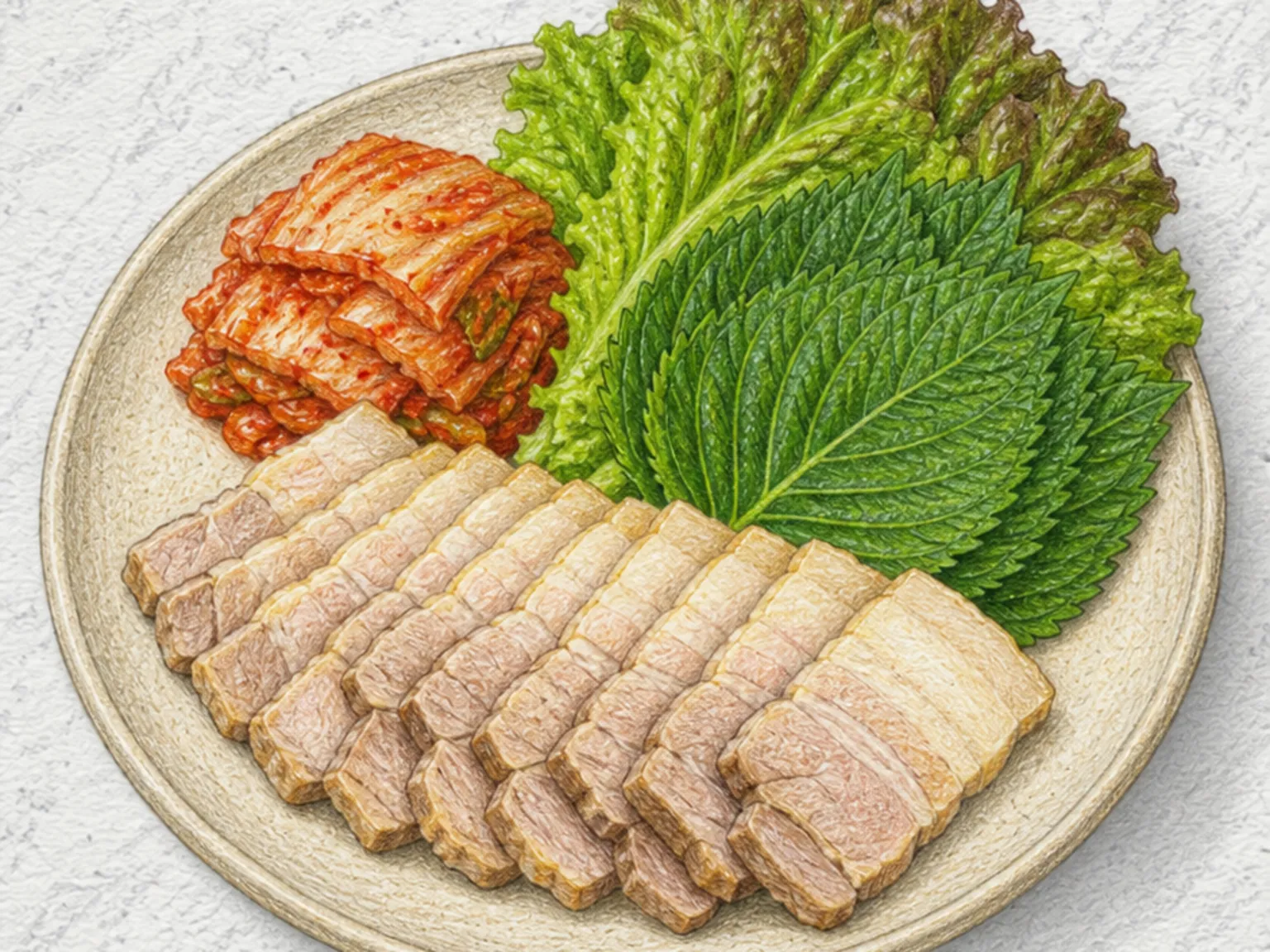
Banchan, grilled meat, large stews, and lettuce wraps often occupy the center. Use serving utensils when provided. If none are available, avoid touching food that others will eat with used chopsticks. Moving a small amount to a personal plate keeps the table easier to manage.
Refills are common for basic side dishes, but the useful rule is restraint. Ask for what the group will finish. A refill is part of service, not permission to create waste.
Age matters more in formal groups
In a meal with colleagues, relatives, or a clear host, wait for the oldest or most senior person to begin. In a casual meal among friends, this may be barely visible. Visitors do not need to perform hierarchy perfectly. A short pause and attention to the host are enough.
When receiving a drink from an older person, holding the glass with two hands is respectful. When pouring, support the bottle or pouring wrist with the other hand. These gestures matter more at a formal dinner than at a quick lunch.
Chopsticks and bowls
Do not leave chopsticks standing upright in rice. Rest them across the spoon rest, table setting, or plate edge. Korean rice and soup bowls usually stay on the table rather than being lifted to the mouth. A spoon handles rice and soup; chopsticks handle side dishes and solid food.
These are conventions, not traps. If dexterity is difficult, ask for a fork. Practical comfort is better than dropping food while trying to appear correct.
At the grill
One person often manages the meat, but this is a role rather than ownership of the food. Do not keep turning every piece or mix cooked and raw meat with the same tool when separate tongs are provided. Move cooked pieces away from the hottest area so the table can eat at a steady pace.
Build wraps small enough for one bite. A leaf can hold meat, sauce, garlic, and one or two additions, but an overloaded wrap is difficult to eat and slows the table.
The priority: consideration beats performance. Keep shared food clean, make room on a crowded table, pass items when someone reaches, and do not pressure anyone to drink.
Alcohol, payment, and tipping
Turning the head slightly away while drinking in front of an elder is still practiced in formal settings. It is not required in every modern meal. Refusing alcohol is acceptable. A direct statement that you do not drink is clearer than repeatedly leaving a full glass.
Tipping is not expected in ordinary restaurants. The person who invited the group may pay, or one person may pay before everyone settles privately. If the group plans to split at the counter, decide before the busiest payment moment.
Choose the next meal format
Use Korea Eats for current restaurant candidates after the table format is clear.