Eat and cook
A Field Guide to Korean Noodles
Choose the experience before the dish name. Decide between hot and cold, broth and sauce, soft wheat and chewy buckwheat or starch, then choose a noodle inside that quadrant.
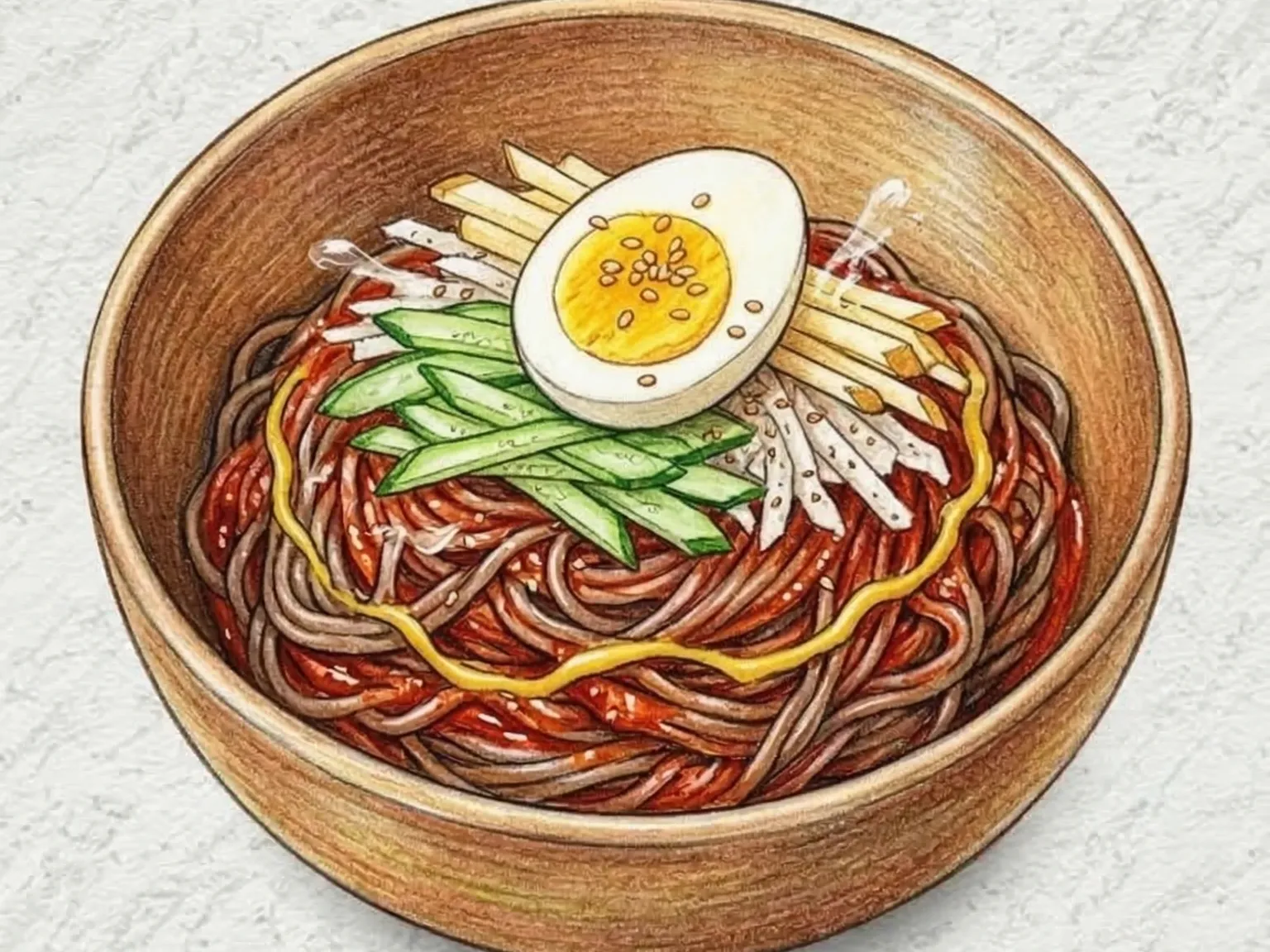
Cold noodles split into broth and sauce
Mul naengmyeon places very chewy noodles in a cold, clear broth with cucumber, radish, egg, and often sliced meat. The flavor is restrained, so vinegar and mustard should be added after tasting.
Bibim naengmyeon removes most of the broth and coats the noodles in a sweet, spicy, acidic sauce. It carries more immediate flavor and often benefits from a sip of warm broth served on the side.
Makguksu uses buckwheat noodles with a rougher texture. It can arrive in broth or mixed seasoning. Kongguksu uses a chilled soybean broth that is creamy without dairy and may be seasoned simply with salt.
Hot broth changes with the noodle
Kalguksu uses knife-cut wheat noodles. The broth may be based on anchovy, chicken, clams, or perilla, and the noodles release starch that gives the bowl body. Janchi-guksu uses thin wheat noodles in a lighter anchovy broth with simple garnish.
Sujebi is technically hand-torn dough rather than noodles, but it belongs in the same decision family. Its broad, irregular pieces create a softer and more rustic bowl.
Ramyeon is springy instant noodle cooked with a seasoning packet, while restaurant ramen usually points to Japanese-style broth and toppings. The spelling and restaurant category help distinguish them.
Mixed and stir-fried noodles
Japchae uses sweet-potato starch noodles stir-fried with vegetables and a soy-based seasoning. It is commonly a shared dish or side rather than a soup meal. Bibim-guksu uses thin noodles in a spicy, tangy sauce and is easier to make quickly at home.
Jjajangmyeon covers wheat noodles with black-bean sauce, pork, and vegetables. Jjamppong pairs noodles with a spicy seafood broth. Both belong to Korean Chinese restaurant culture and are frequently ordered together with tangsuyuk for a group.
Fast choice: rich meal before it, choose cold broth. Cold weather, choose kalguksu or sujebi. Fast home lunch, choose bibim-guksu. Shared celebration table, add japchae. Korean Chinese delivery, compare jjajangmyeon and jjamppong.
Texture depends on handling
Rinse cold noodles aggressively to remove surface starch and stop cooking. Drain well so the sauce is not diluted. For hot wheat noodles, serve immediately because they continue absorbing broth. Sweet-potato starch noodles should be cooked until flexible, then coated before they dry and stick.
Restaurant scissors are often provided for naengmyeon. Cut once or twice if needed, but first taste the intact texture. Excessive cutting turns a deliberately chewy noodle into short fragments.
Pair without doubling the same weight
Naengmyeon follows grilled meat because cold acidity counters fat. Kalguksu pairs with kimchi because the mild broth can carry a sharp side dish. Japchae fits a larger table with protein and vegetables. A noodle bowl with dumplings is usually enough for one meal, so rice is optional rather than automatic.
Continue to recipes
Use Charim for noodle quantities, broth methods, sauces, and related dishes.